
So good news! My application to R&D music games suitable for adults has been successful – thanks to support from public funding by the National Lottery through Arts Council England. This is work I’ve wanted to make for a long time – why?
I’m mostly bothered about interactivity, agency, capability and quality of life – probably in that order. People can’t have a good quality of life if there’s mismatch between their environment and what they can do to affect it. People can’t develop new skills and capabilities to match what they want if they have no choice to act, learn, or make mistakes. And people can’t develop agency without first being shown that their actions and existence have importance for others. This is why I’m mad about play – play develops the skills, and addresses the social needs, and can create the nurturing spaces we need to face our problems.

My facilitation work has started from a background in working with young people – early years music, following children around with glue and googly eyes, drama workshops in Special Educational spaces, copy-play with young people learning the early stages of communication, one-to-ones about songwriting in hospitals. There is such great need – but there are many companies and artists doing amazing work. For adults, and for children in formal education – what is on offer like this? Communication failures, lack of confidence, and difficulty navigating the world are not problems that only primary-aged children and those in Special Educational settings possess. We all need agency and creativity. Many institutions that focus on adults (or young people who think that play is not for them) require a great deal of behaviour control to function day-to-day – and the mental health impact of this is severe. You don’t need me to tell you how anxiety, stress, and low-self worth can affect trauma, mental health conditions, dementia and just growing through life.
I’ve loved the chances I’ve had to work with teenagers, with adults, with patients in hospitals, with care home residents – and have often found the toolkit for musical play unsuitable for these exact people. Inhibitions so often get in the way – but reasonably! Of course a patient facing a great deal of control – who is being shown (even if not told) their needs are unimportant and that their behaviour is surveilled – will not want to engage in play! Play requires time dedicated to individual relationships, an openness to bend strict hierarchies (at least for a while), and crucially a space for vulnerability and embarrassment. In institutions like secondary schools, hospitals, and care homes, these requirements are regularly missing.
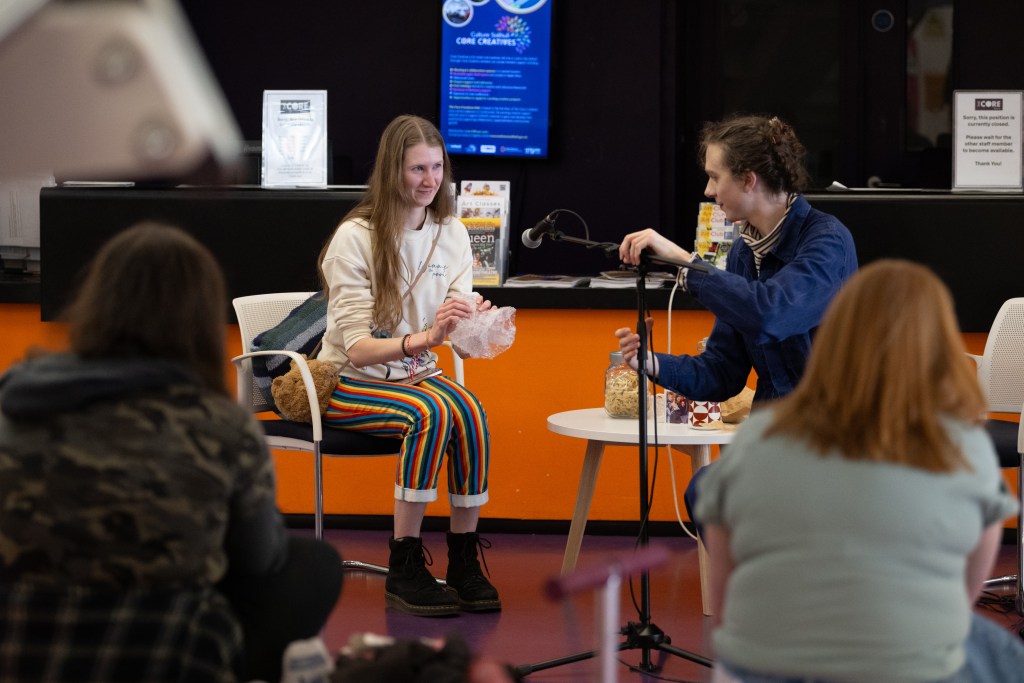
The challenge of this project is to find and test the ways we can offer something joyful and useful to patients, students, residents, and adults anywhere – and how musicians and community artists can create spaces where life can keep growing even where joy can be denied. I want to figure out the ways to test social boundaries, try new things and develop someone’s expression that feel safe to them – by using music as the vehicle for new connections.
I hold that play is vital to a good quality of life. It is the fastest way of learning, it ensures social connections, and it reminds those who play of what they are capable of doing, feeling and becoming. I hope you agree and want to hear more about this work as it continues.


Leave a comment