The R&D Music Play For Grown Ups was a chance for Ann & I to compare what goes on in musical workshops made for different demographics, contrasting those that are considered ‘childish’ and those that are thought of as ‘grown-up’.
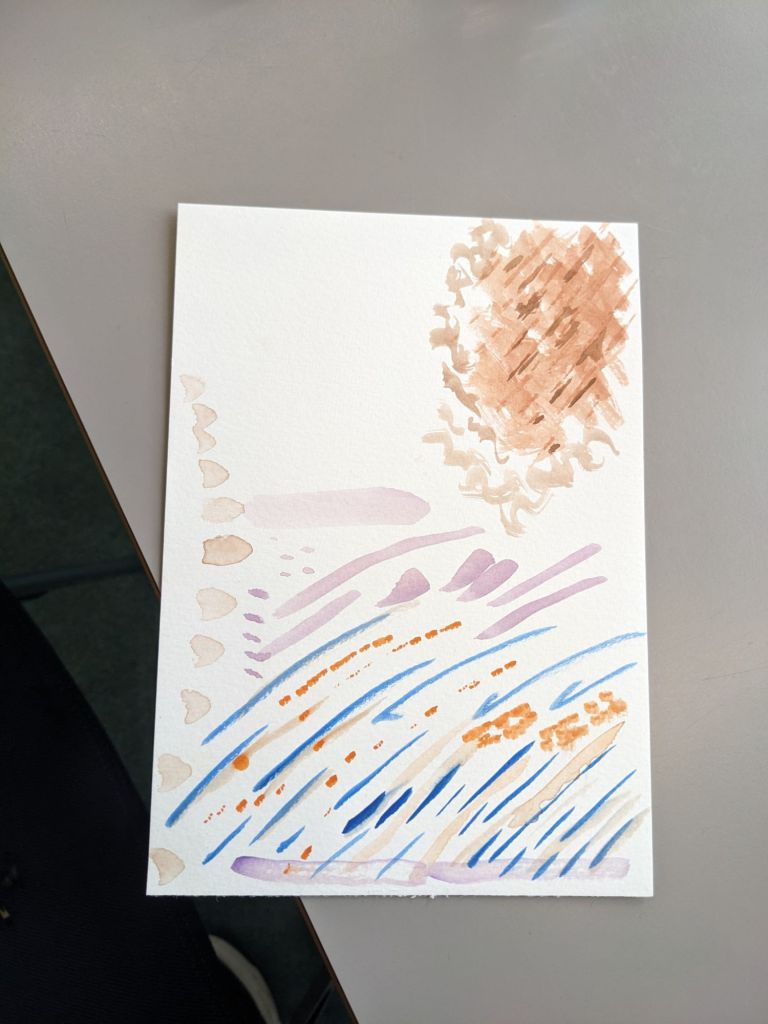
We had a look at lots of example settings – like nurseries, Pupil Referral Units, Special Educational schools, care homes, psychiatric hospitals, sixth forms, and lots more. We gathered up community artists, setting professionals (think occupational therapists, teachers, activity coordinators) to consolidate all of this – these approaches, concerns, experiences and ideas – over 12 days of experimentation and reflection. We particularly looked at what happens when music is matched with other art forms, to see what music and either theatre, clowning, painting, dance, movement, sculpture can offer participants when combined together.
What did we do?
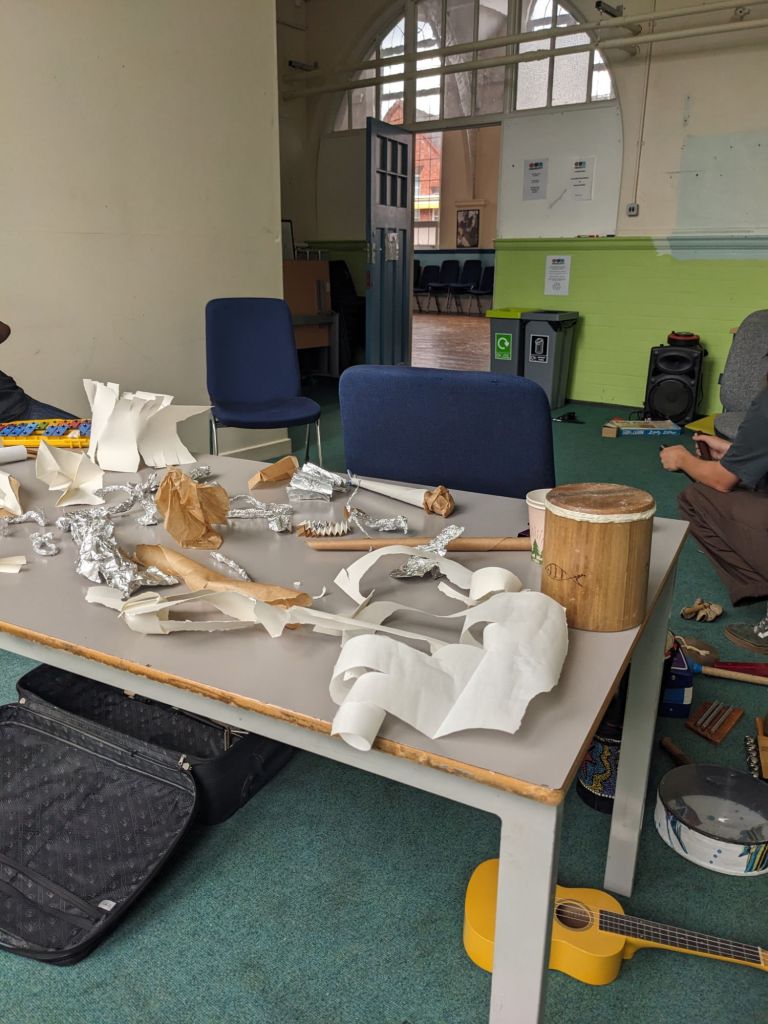
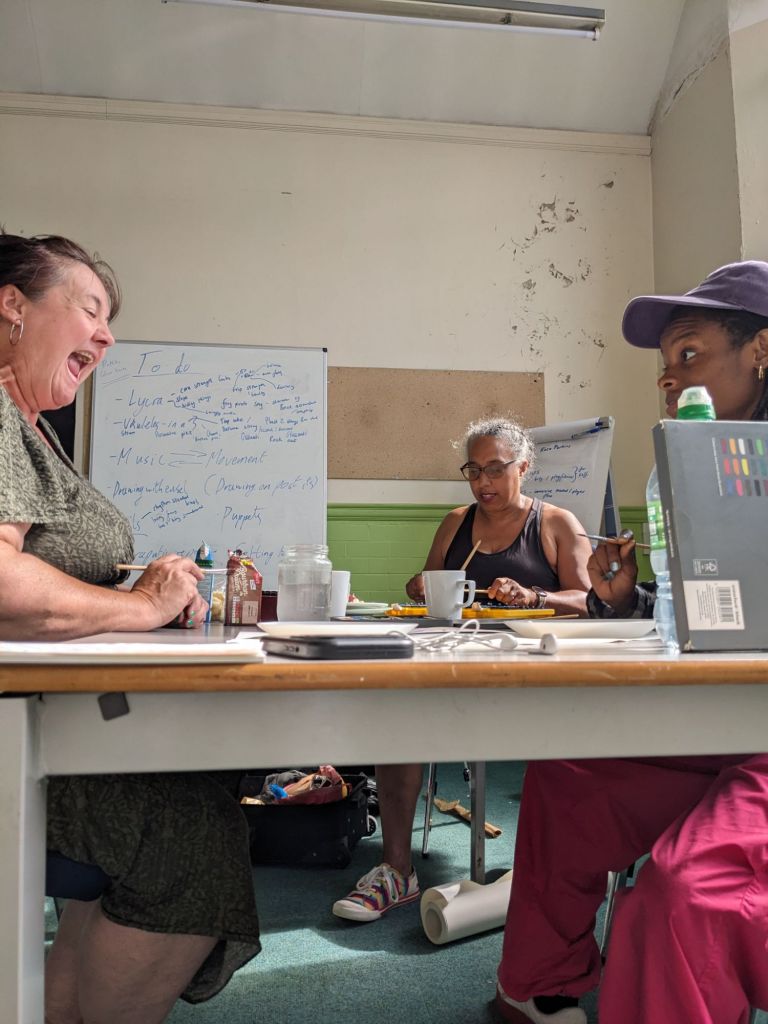
Mostly played around a lot with ideas that we felt were fun and useful. We had a little bit of research time for the the practices we didn’t already know about, but otherwise we either refreshed our memories, tried out new offers, talked about issues, and tested the offers for outside eyes. We got to ask about challenges in individual professional’s workplaces in making play for social skills a part of the curriculum, and invite some specialists to either share what they worked on or take a look at what we had come up with. We invited some community artists to join the discussions and experiments to see what else was possible, and chat a bit about the particular setting. We then had some follow up conversations with the setting specialists about future work, particular issues or experiences they had, and maybe things we might have missed.
Who was involved?
We got to work with:
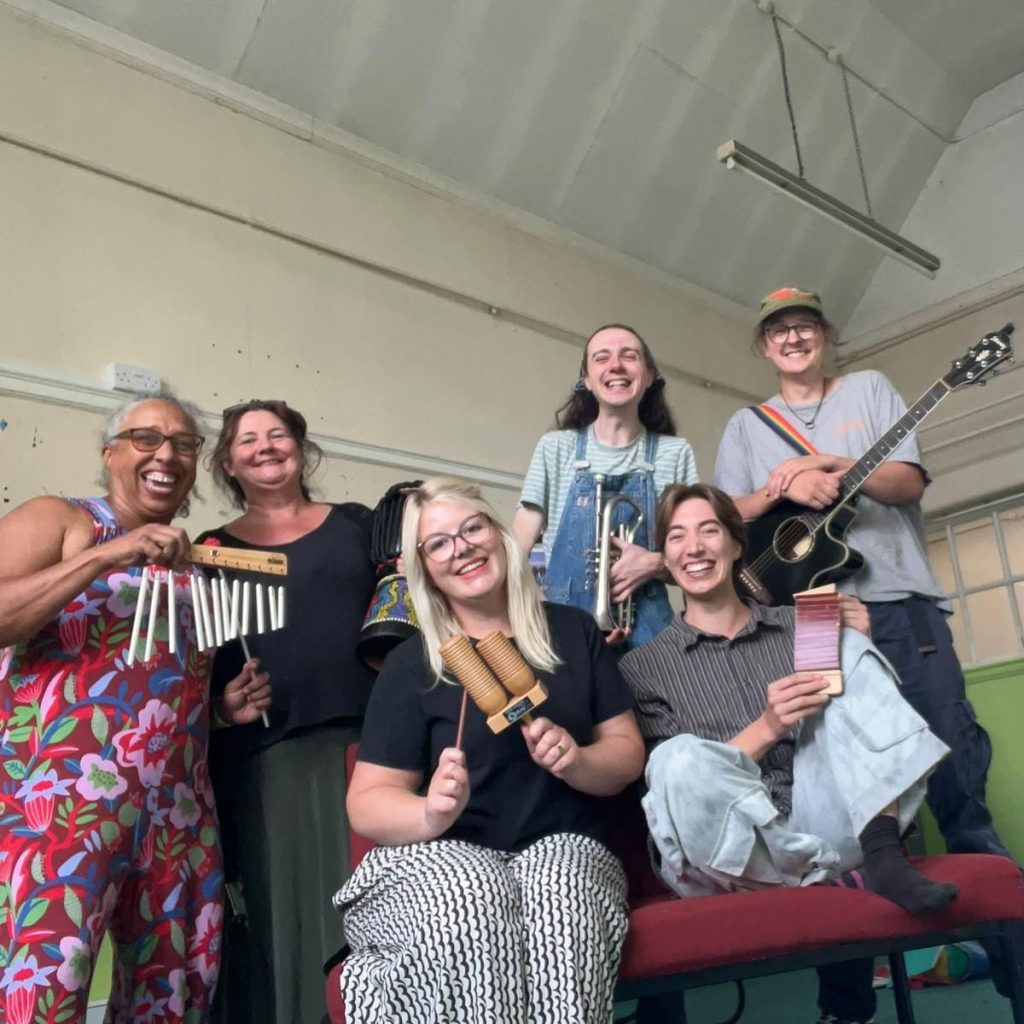
- Katerina Pushkin – theatre-music improvisation specialist
- Peter Burgess – intensive interaction & music-play specialist
- Penny Osmond – early years music specialist
- Rumbidzai Savanhu – visual artist, adults and young people
- Rochae Stephens-Morrisons – non-verbal theatre artist with Open Theatre
- Michelle Howell – Lecturer in hairdressing, post-16
- Joe Clixby – musician with young people, SE settings, psychiatric
- Mukti Rana – theatre artist, children & young people
- Janice Connolly – theatre director – PRUs, Care homes, hospitals, and much more
- Rose Gordon – dance artist – SE and older adult settings
- Laura Wall – Activity Coordinator, care homes
- J.J. Escott – visual, theatre and horticulture artist – adults & childcren
- Beth Hopkins – Early years and gigging musician
- Nicola Moore – Adult psychiatric Occupational Therapist
- Sarah Boulter – Dance & movement artist and co-director of Spiltmilk Dance – older adults
and the core team of Ann Jones – improvising musican and facilitator, mentor and friend – and me.
What came of it?
Quite a lot of writing!
Some settings had particular concerns or needs we wanted to try address – those will be collected in some writing for experienced facilitators. When writing to the art council meanwhile, I really wanted to make a list of workshop games, for early career artists or activity coordinators. I have collected several – but on reflection I think there are already places to find these games if you know where to look – and will be making a list of those places.
I will be collating and writing some resources and information for different people – please watch this space and my blog at news.
What might become of it?
We became really aware of how rare it is for us to share practice and reflect together between our workplaces – so we want this research to be useful to creative practitioners (whether like an official ‘artist’ or not) – particularly those working with communities, and particularly if you want to focus on connection and agency in your work. We want to change the conditions for service users, who are so often neglected and failed when it comes to communication and their right to live a life on their terms – despite all the hard work that staff are putting into their workplaces. And we definitely need this playful, explorative, relationship-based music practice to be funded consistently – or the benefits just aren’t going to happen.
We also want this research to be taken on further. We’ve only just begun to understand as creatives here how, for example, applying something meant for learning disabled young people (think something like intensive interaction, and its benefits) could address problems with like, speaking students in mainstream education. I really believe we have so much to learn from each other and that our knowledge and experience outside of institutions needs and to be made accessible to more people and needs investigating and supporting.
And of course, we played around A LOT – so we’re really hopeful in the future to get to run community arts projects with care homes, community mental healthcare teams, and further education – both for participants and staff training. (watch this space over the next couple of months!)
Funders, supporters, and thanks to:
- Arts Council England – funding
- Stan’s Cafe – rehearsal space
- Ann Jones – much advice
- J.J. Escott – much support
- Jenny Martin – training and reassurance
- My mother – passion experience and expertise
This project has been supported using public funding by the National Lottery through Arts Council England.


